
The Saral Jeevan Bima product to be offered by all life insurance companies will be a non-linked non-participating individual pure-risk premium life insurance plan.

Despite taking a hit on profitability amid the pandemic, companies with strong balance sheets are gaining market share because of consolidation in their respective sectors.

Kalrock Capital-Murari Lal Jalan combine has emerged as the frontrunner. A consortium of Imperial Capital and FSTC is the other bidder.

India saw growth of around 213 per cent in the number of real-time payments processed over the past year.

Market observers also said the approvals depended a lot on the funds themselves, and the extent to which they followed the new norms introduced last year.

The insurance companies will use "green, orange, and red" colours to indicate the complexity of the products that are on offer.

This is aimed at improving liquidity in all schemes and would help them to meet sudden redemption pressures, said Sebi chairman Ajay Tyagi.

However, the number of renewals has grown by only 0.4 per cent, which means only high value and ticket size renewals are coming.
As many as 121,739 claims settled by insurers so far, amounting to Rs 1,165.81 crore.

Although insurers feel loss ratios in the health segment may get impacted, and profitability will take a hit, capital erosion will not take place, at least for the large entities.

Such businesses outperform non-family firms by 3% in first six months of CY20, says Credit Suisse report.

Market players said the new norms were more suited for online brokers, where clients were typically internet savvy.
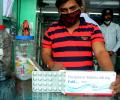
From July 10, when it was launched till August 7, 1,087,030 lives have been covered under Corona Kavach through 648,276 policies with premium of Rs 182 crore and sum assured for Rs 42,956 crore. In addition, 186,347 lives have been covered under Corona Rakshak through 156,695 policies with premium of Rs 25.5 crore and sum assured for Rs 3,293 crore, an Irdai official said.
Total payments in the economy grew 24.08 per cent to Rs117.43 trillion in value terms in June, compared to Rs94.64 trillion in May.
While initially, the claim amount was high, it has now moderated with many states prescribing a standard treatment rate for Covid-19. Of the total claims received, nearly 66,000 claims amounting to Rs 628.95 crore have been settled so far.

While Air India Express is expected to get the full insured amount for the hull loss, it will have to pay compensation to the kin of the deceased and injured, according to applicable laws. The compensation will be paid from its liability cover.
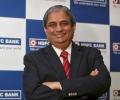
Puri will hang up his boots this October as he will reach the maximum age limit of 70 for a chief executive officer of a private bank. Puri has been at the helm of HDFC Bank for the past 26 years, since its inception in 1994.

A consortium - comprising Imperial Capital, Flight Simulation Technique Centre, and Big Charter - have placed a bid for Jet, while the other consortium is led by Kalorck Capital.

According to experts, work from home, volatility in stock markets worldwide, and redemption pressures compelled investors to defer new investment plans.
With the lockdown being eased gradually, providing more and more digital solutions, for service delivery and procurement of new policies, is what the corporation is focussing on.
 © 2026 Rediff.com - Advertise with us - Disclaimer - Privacy Policy - Sitemap - Feedback - About us - Terms of use - Grievances